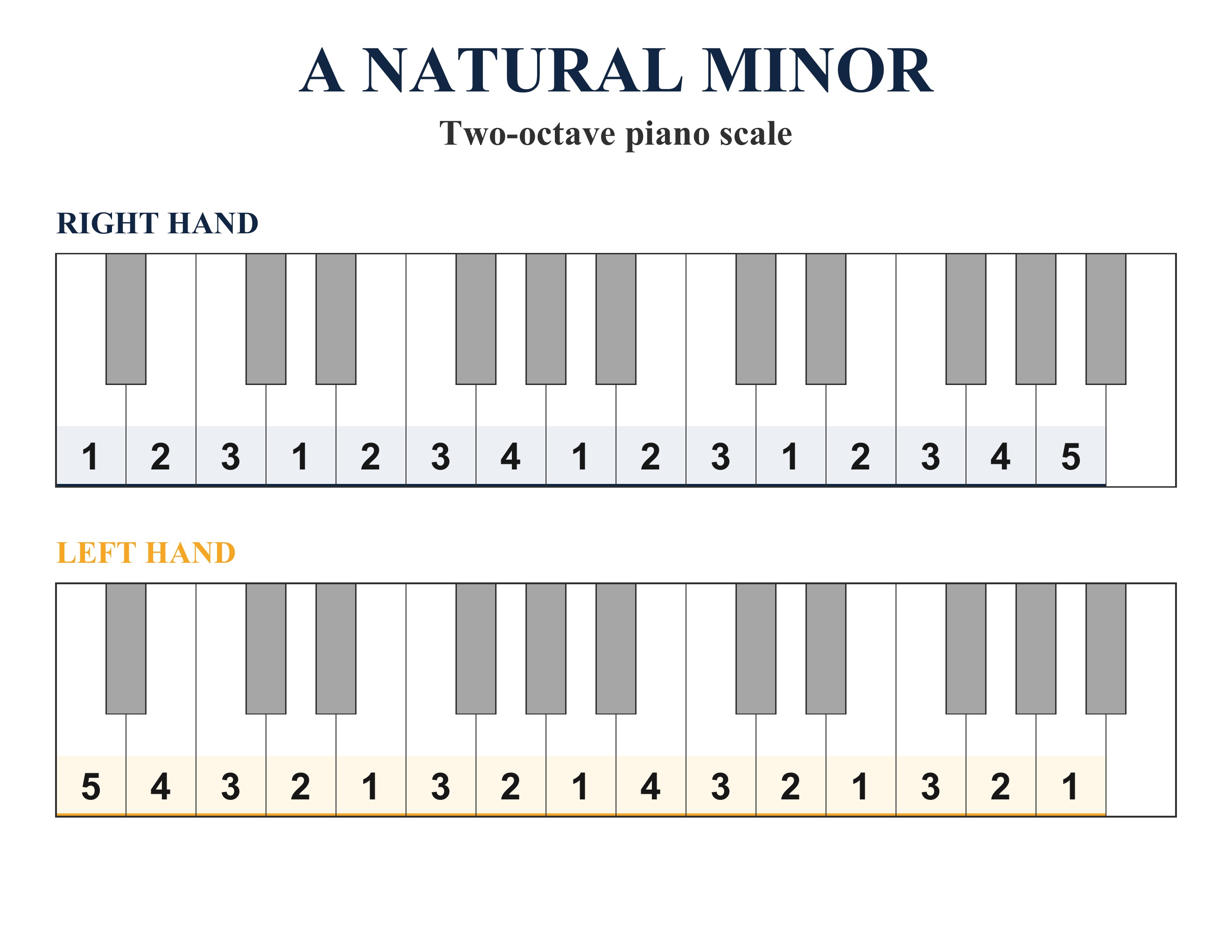
Explore the complete collection of 36 major, natural minor, and harmonic minor scale charts, with PDFs and JPEGs for every key.
Related scales: A Major · A Harmonic Minor.
Scales have long connected the study of the keyboard with the demands of real music. Carl Czerny recalled that Beethoven devoted his early lessons to scales in every key, paying particular attention to hand position, fingering, and the movement of the thumb. These fundamentals supported the smooth, connected playing Beethoven valued. Czerny later explained that scales develop evenness and fluency, establish reliable fingering, and prepare musicians for patterns found throughout the repertoire. Their value extended to accomplished performers: Sergei Rachmaninoff emphasized broad technical preparation that enables a musician to meet the demands of many compositions, while Josef Hofmann valued scales for developing the ear’s sense of key and intervals as well as the fingers. Together, these perspectives show why scales remain part of a pianist’s musical foundation: they make the keyboard familiar and help turn sequences of notes into clear, controlled, expressive phrases.